

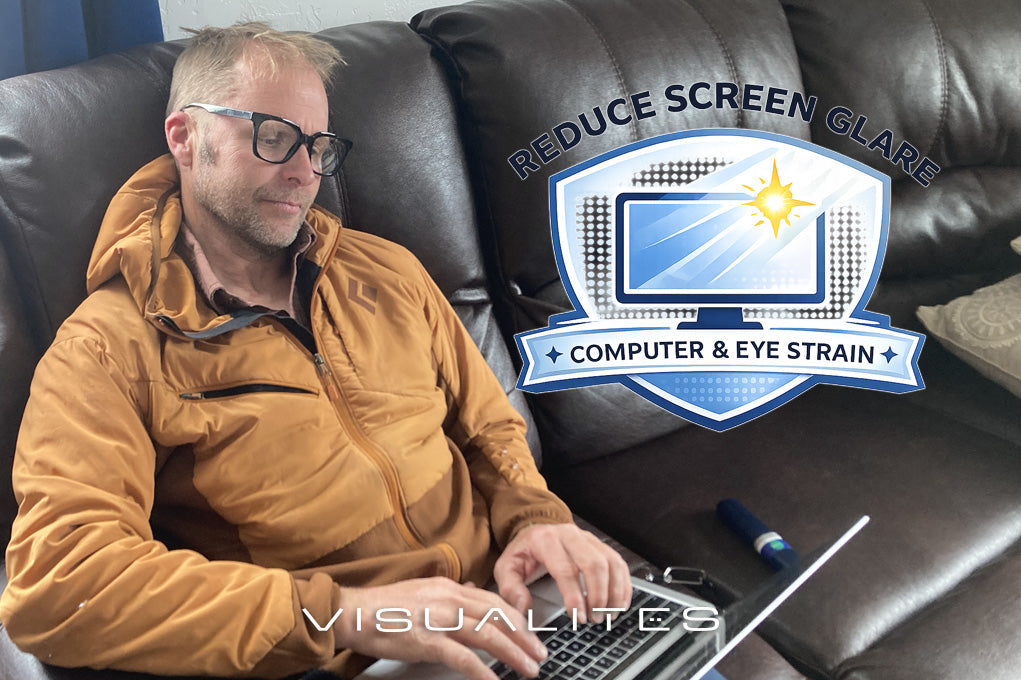
Why Do My Reading Glasses Reflect My Screen?
If you’ve ever opened your laptop for a Zoom call or settled into a long work session only to notice bright reflections bouncing across your lenses, you’re not alone. Screen glare is one of the most common frustrations for people who wear reading glasses—especially in today’s world of remote work, video calls, and multiple monitors.
But why does it happen in the first place?
The answer usually comes down to a combination of lighting, screen positioning, and lens coatings.

Modern screens emit a significant amount of light. At the same time, overhead lighting, windows, desk lamps, and even sunlight can bounce off the surface of your lenses. When light reflects off the front or back of your glasses, it creates the glare you see in mirrors, photos, or video calls.
This effect is often more noticeable when:
- Working in front of bright monitors
- Sitting near windows
- Using overhead lighting
- Wearing glasses without anti-reflective coatings
- Moving between multiple screens throughout the day
For many people, reflections become especially obvious during Zoom or Teams meetings where webcams and lighting angles amplify glare directly into the camera.
The Difference Between Screen Brightness and Lens Reflection
A lot of people assume their computer screen itself is the only problem, but the real issue is often how surrounding light interacts with the lenses.
For example:
- A bright window behind your monitor can reflect strongly off your glasses
- Ceiling lights positioned above you may bounce directly into your lenses
- Glossy monitors can increase the amount of reflected light in your workspace
Even high-quality reading glasses can reflect light if the environment is working against them.
Do Anti-Reflective Coatings Help?
Yes—anti-reflective (AR) coatings are one of the most effective ways to reduce visible glare on reading glasses.
AR coatings are designed to minimize light reflections on the lens surface, helping more light pass through the lens instead of bouncing back outward.
This often results in:
- Clearer vision
- Reduced glare during screen use
- Less distracting reflections on video calls
- Improved visual comfort during long workdays
Many people also notice that anti-reflective lenses make eye contact appear more natural on camera because viewers can see your eyes more clearly instead of seeing bright reflections across the lenses.
Why Screen Use Makes the Problem Worse
Most people spend far more time in front of screens today than they did even five years ago. Between laptops, phones, tablets, and external monitors, our eyes are constantly adjusting to digital light sources.
This creates two common issues:
- Increased reflections from multiple light sources
- Greater visual fatigue during extended focus sessions
That’s one reason lightweight reading glasses with quality lens coatings have become increasingly popular among professionals, remote workers, and anyone spending long hours reading on digital devices.
Simple Ways to Reduce Reflections
Before replacing your glasses, there are a few easy adjustments that can help reduce glare dramatically:
Reposition Your Lighting
Avoid placing bright lights directly above or behind your screen.
Lower Screen Brightness Slightly
Many monitors are brighter than necessary, especially at night.
Adjust Your Monitor Angle
Tilting the screen slightly can reduce direct reflections into your lenses.
Use Softer Ambient Lighting
Warm indirect lighting is often easier on the eyes than harsh overhead lights.
Consider Anti-Reflective Lenses
If glare consistently bothers you, lens coatings can make a noticeable difference during daily screen use.
The Goal Isn’t Perfectly “Invisible” Glasses
No lens can eliminate every reflection in every environment. But quality reading glasses with proper coatings can significantly reduce glare and improve comfort throughout the day.
For people who spend hours reading, working, creating, or taking video calls, reducing reflections isn’t just about appearance—it’s about making everyday vision feel more natural and less distracting.
Whether you work remotely, read on a tablet, or simply want more comfortable screen time, understanding what causes reflections is the first step toward reducing them.